Home
Share Internet News
Share Internet News
XX Information Network - Domestic and foreign news, current affairs, strange things, and new things

Updated: 2019-09-25 10:50:55Views:
The British "Independent" website published an article titled "Saudi Drone Attacks Change the Nature of Global War" on September 20, written by Patrick Cockburn. The article is compiled as follows:
The large-scale attacks by drones and missiles on Saudi Arabian oil facilities not only changed the balance of military power in the Middle East, but also marked a change in the nature of global wars.
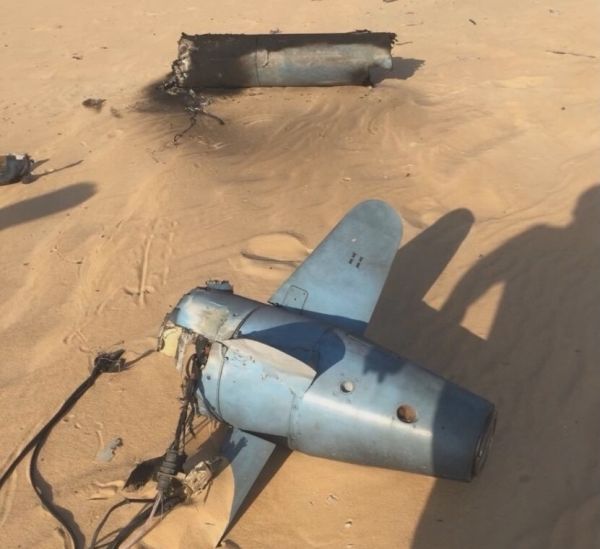
Weapons debris in the Saudi desert appeared on social media (Yahoo News website in the United States)
Cheap weapons Posing a big threat
On September 14, 18 drones and 7 cruise missiles - all of which are cheap and less advanced than modern military aircraft - cut Saudi Arabia's crude oil production in half and increased world oil prices by 20%.
Saudi Arabia’s defense budget last year reached $67.6 billion, a large sum of which was spent on aircraft and air defense systems, but the aircraft and air defense systems obviously failed to prevent attacks. U.S. troops in the Gulf did not know what had happened until it was all over.
The reasons given for the attack included that the drone was flying too low to be detected and that it "unfairly" came from an unexpected direction. This explanation sounds pathetic, given that weapons manufacturers and military commanders proudly boast about the effectiveness of their weapons systems.
The debate over whether Iran or Yemen's Houthis carried out the attack continues, but the focus on responsibility has diverted attention from a far more important development. Intent: By acting independently or with the help of allies, a middle power like Iran, under sanctions and with limited resources and technical expertise, has inflicted serious damage on a Saudi Arabia that is theoretically much better equipped and supposedly protected by the United States, the world's most powerful military superpower.
If the United States and Saudi Arabia are particularly hesitant to retaliate against Iran, it is because they have now changed their views a year ago and know that counterattacks will not be without cost. History may repeat itself: Iran is not called a “drone superpower” for nothing. Saudi oil production facilities and desalination plants are ready targets for drones and small missiles.
In other words, the future military playing field will be much more level in a conflict between a country with advanced air force and air defense systems and a country that does not. The trump card of the United States, NATO countries, and Israel has always been that their air power is overwhelmingly superior to any potential enemy. Suddenly, this calculus is undermined because when it comes to airpower, drones enable almost any power to become a player.
The proliferation of precision strike weapons
Anthony Cordesman, a military expert at the Center for Strategic and International Studies in Washington, succinctly summarized the significance of this change, writing: "The attack on Saudi Arabia sends a clear strategic warning that the era of U.S. air supremacy in the Gulf and the U.S.'s near-monopoly on precision strike capabilities is rapidly disappearing." He explained that a new generation of drones, cruise missiles and precision strike ballistic missiles are entering Iran's arsenal and have begun to spread to the Houthi armed forces in Yemen and Hezbollah in Lebanon.
Saudi officials showed the wreckage of drones and missiles to foreign diplomats and reporters. The most important feature of these broken drone and missile parts is that even in fully functional condition, these weapons that have shaken up the world economy don't cost a lot of money. In contrast, as Saudi Arabia's main air defense weapon, the US-made "Patriot" anti-aircraft missiles cost US$3 million each and were useless in the face of an attack.
Cost and simplicity matter because they mean Iran, the Houthis, Hezbollah, and virtually any country can produce drones and missiles in quantities large enough to defeat any defenses they face.
The price of drones is tens of thousands or even hundreds of thousands of dollars. In comparison, the price of an F-35 fighter jet is as high as 122 million U.S. dollars, so expensive that only a limited number of them can be purchased. As the implications of the attacks on Abqaiq and Khurais oil facilities are considered, governments around the world will be asking the chiefs of their air forces to explain why they need to spend so much money when cheaper but effective alternatives are available. Following past precedent, Air Force chiefs and weapons manufacturers would fight tooth and nail to secure significant budget increases to purchase weapons of questionable effectiveness in a real war.
The attacks in Saudi Arabia have reinforced a trend toward war. According to this trend, cheap and easily obtained weapons will prevail. Look at the IED "records". Such devices are usually made from readily available fertilizer, detonated with a command wire, and placed on or beside highways.
When dealing with the US-led coalition forces in Iraq and Afghanistan, the anti-US armed forces used a large number of improvised explosive devices, which had a great impact. The U.S. military has deployed vast resources to find ways to counter this deadly device, including spending at least $40 billion to purchase 27,000 heavy armored vehicles known as mine-resistant and ambush-resistant vehicles. A subsequent U.S. Army study showed that the number of U.S. troops killed and injured in attacks on mine-resistant ambush-resistant vehicles was exactly the same as in previous attacks on other vehicles.





